
Blogs

Canine Separation Anxiety: How to Spot It, Fix It, and Help Your Dog Stay Calm When You Leave
Canine separation anxiety is not your dog being “naughty” or over-attached – it’s a stress disorder. Separation anxiety in dogs shows up as barking, destruction, panic and escape attempts whenever you leave. The good news: with the right behavior modification plan, most dogs can improve. In my online dog training consultations for separation anxiety, I build a clear, step-by-step plan tailored to your dog and your real-life schedule.

If your dog screams the house down every time you leave, you are not dealing with a “naughty” dog.
You are dealing with canine separation anxiety.
This is not your dog being dramatic, stubborn, or “too attached”.
It is a stress disorder.
Left untreated, separation anxiety in dogs usually gets worse, not better. The good news: with the right behavior modification plan, most dogs can improve significantly – without guessing, and without hoping it goes away on its own.
This is exactly the type of problem I work on in my online dog training consultations for separation anxiety. If you recognize your dog in what you are about to read, you can get a clear, step-by-step plan instead of trying random tips from the internet.
What Is Canine Separation Anxiety?
Canine separation anxiety is an intense panic response when a dog is left alone or separated from a specific person.
It often shows up as:
Excessive barking or howling
Destructive chewing
Scratching doors and windows
Trying to escape crates or rooms
This is not “love”, it is not “cute”, and it is not your dog being over-attached in an affectionate way. It is your dog in emotional distress.
Common Triggers and Life Changes
Separation anxiety in dogs is usually linked to changes in the dog’s life, such as:
Moving to a new home
A change in routine or working hours
Loss of an owner or family member
Rehoming or multiple owners
Long periods of constant togetherness, then sudden separation
Research suggests that roughly 15–20% of dogs may suffer from some form of separation anxiety (American Kennel Club).
That is a lot of stressed dogs and exhausted owners.
The important part: this is a behavioral problem caused by humans.
If humans helped create it through patterns and habits, humans can also unlearn it through better habits.
Recognizing Separation Anxiety Symptoms in Your Dog
You cannot fix what you refuse to name.
Recognizing separation anxiety symptoms early makes treatment easier and faster.
Core Separation Anxiety Symptoms
Common signs of separation anxiety in dogs include:
Excessive barking, whining, or howling when left alone
Pacing around the house, especially near exits
Destructive behavior around doors, windows, or crates
Extreme clinginess and shadowing you from room to room
Many dogs also show physical stress signs:
Drooling or panting without physical exertion
Self-harm, such as chewing their paws or licking one spot raw
Trying to escape confinement and injuring themselves in the process
If these behaviors mainly show up when you leave, are gone, or are preparing to leave, you are probably dealing with separation anxiety, not boredom (PetMD).
Behavioral Signs While You Are Gone
What your dog does during your absence tells you a lot about their emotional state.
Typical behavioral signs of separation anxiety during owner absence:
Incessant barking or whining, often starting as soon as you close the door
Restless pacing through the house or from room to room
Scratching at doors and windows, trying to “break out”
Chewing furniture, door frames, blinds, carpets, or anything near exits
These behaviors come from panic and frustration, not spite.
Your dog is not “getting back at you” for leaving.
They are trying to survive what they experience as a crisis.
Once you understand that, you can stop taking it personally and start working on a proper behavior modification plan.
Pre-Departure Anxiety: The Early Warning Signs
Dogs with separation anxiety usually start stressing out before you actually leave.
Typical pre-departure anxiety indicators:
Whining, pacing, or panting when you grab keys, shoes, or your bag
Jumping on you for attention
Your “leaving routine” becomes a trigger:
Pick up keys → instant stress
Put on work shoes → instant worry
Grab your laptop bag → heart rate up
These small signs show you where to start with systematic desensitization and counterconditioning later.
Common Causes and Risk Factors for Separation Anxiety in Dogs
Separation anxiety rarely appears “out of thin air”. There are usually clear causes.
Common Causes
Loaded Hi’s and Bye’s when you arrive and leave home
Giving your dog excessive and constant attention
History of abandonment or multiple rehomings
Sudden change in schedule or lifestyle (back to office, new job, shift work)
Major change in the home (divorce, new baby, someone moving out)
Long periods of constant togetherness (e.g. work from home, recovery from surgery) followed by abrupt separation
Risk Factors
Dogs that are extremely human-focused and bond very intensely
Puppies that were never taught how to be calm and alone in small doses
Dogs that were never properly socialized and lack overall confidence
Any dog can end up with separation anxiety if the circumstances are stressful enough.
Behavior Modification: The Core Treatment for Canine Separation Anxiety
There is no magic pill for canine separation anxiety.
The foundation of treatment is behavior modification.
The Goal
Change your dog’s emotional response to being alone:
From “You are gone, I am dying”
To “You are gone, I know what to do, and I can handle this”.
That means:
Identifying your dog’s specific triggers
Working through systematic desensitization to those triggers
Using counterconditioning techniques to make alone time feel safe and predictable
With my clients, I build a custom behavior modification plan that fits:
Their schedule
Their home layout
Their dog’s temperament and severity of anxiety
The steps are clear, but you need consistency and patience. This is where having a trainer to keep you accountable changes everything.
Systematic Desensitization for Separation Anxiety: How It Works
Systematic desensitization means you break the problem into small, manageable pieces – not throw your dog into the deep end and hope they learn to swim.
In Practice
You:
Start with the smallest version of “leaving” your dog can handle without panicking.
Repeat that tiny step until your dog truly stays calm.
Slowly increase duration or intensity, one small step at a time.
Examples of Desensitization Steps
Keep your body language boring and neutral when you arrive or leave home.
Standing up, picking up your keys, and then sitting back down.
Walking to the door, touching the handle, then returning to the sofa.
Stepping outside for a few seconds, then returning before your dog escalates.
You are essentially randomizing the events that would previously trigger your dog. This way, they can’t predict or anticipate when you are coming or leaving home.
The protocol is boring, structured, and repetitive – and it works when you do it correctly.
This is the part most owners struggle with alone. They:
Increase their time away from their dog in increments that are too big and too fast.
Don’t know how to crate train their dog properly.
Don’t know how to adjust when the dog regresses
Accidentally put the dog back into full panic daily
In my online dog training consultations for separation anxiety, I map out the exact steps and adjust the systematic desensitization protocol weekly based on your videos and feedback.
Counterconditioning: Making Alone Time a Positive Experience
Counterconditioning means pairing something your dog dislikes (being alone) with something they genuinely love.
For separation anxiety, that often includes:
High-value food (stuffed Kongs, long-lasting chews, food puzzles)
Treats that you leave in their crate to turn it into a “magic box”
Special toys that only appear during alone time
Calm background noise your dog finds soothing
The goal:
Your dog starts to see the beginning of alone time as a signal for “this is when the good stuff happens”, instead of “this is when life falls apart.”
Key Rules for Effective Counterconditioning
The reward must be something your dog truly values, not just “kibble in a bowl”.
These special rewards should only appear in connection with alone time, not all day.
The difficulty and duration must match what your dog can handle without going into full blown anxiety.
When you combine counterconditioning with systematic desensitization, your dog forms a new emotional association with your departures.
How to Make My Behavioral Advice Actually Happen in Real Life
A behavior plan is useless if nobody follows it.
To get the maximum impact from any separation anxiety training plan:
Build a weekly routine you can realistically follow
Decide in advance which days you will run short training sessions
Keep rules and expectations consistent across all family members
Use simple cues and markers so your dog knows what is happening
Engagement helps a lot:
Use interactive toys and food puzzles
Run short obedience sessions before you leave
Give your dog a job and structure, not just “freedom and hope”
In my online dog training consultations, I do not just send you a generic checklist.
I fit the plan into your actual work week, travel schedule, kids, and home life – so you can practically execute it.
Practical Management Strategies While You Work on Training
You still have a life to live while you work through separation anxiety treatment.
Management stops things from getting worse in the meantime.
Practical Management Strategies
Keep arrivals and departures calm and neutral – no emotional drama at the door
Use white noise, curtains, and baby gates to reduce visual and sound triggers
Management is not a replacement for training. But it stops your dog from panicking over and over, which makes your training sessions more effective.
Exercise and Mental Stimulation
You cannot fix separation anxiety with exercise alone, but it is a powerful supporting piece.
Good exercise and mental stimulation:
Burns off excess physical energy
Burns of excess mental energy
Lowers overall stress levels
Gives your dog structure and a clear “job”
Helpful Ideas
Structured walks, not just random yard time
Play sessions that involve chasing, tug, or fetch in a controlled way
Scent games and food puzzles
Short obedience or trick-training sessions for mental work
A dog that is physically and mentally satisfied is better equipped to handle short periods of alone time without tipping into panic.
Creating a Safe Space and Using Crate Training Correctly
Dogs with separation anxiety do better when they have a safe space, not full run of the house.
This can be:
A crate
A small, dog-proofed room
A gated-off area away from constant traffic
A proper safe space:
Is quiet and away from busy windows and doors
Has a comfortable bed, familiar toys, and maybe an item with your scent
Is associated with rest and calm, not punishment
Crate Training for Separation Anxiety
Crate training will help if it is done correctly:
Introduce the crate slowly with food and positive associations
Let your dog enter and exit freely at first
Only close the door for short periods once your dog is relaxed inside
Turn that crate into a magic box for your dog
Done right, the crate becomes the central safe zone in your separation anxiety training.
Routines and Departure Rituals: Reducing Uncertainty
Dogs thrive on predictable routines.
Uncertainty feeds anxiety.
Helpful routines for separation anxiety in dogs:
Regular feeding times
Predictable walk and play schedules
A consistent potty schedule
Better Departure Rituals
Your departure rituals should be boring:
No emotional “goodbye speeches”
No big hugs and high-pitched reassurance at the door
Just a short and neutral exit.
When you return, keep it low key.
The more “normal” you make coming and going, the less your dog reacts like each departure is life or death.
Combining Multiple Training Approaches for Best Results
The best results come from combining multiple treatment approaches into one clear plan.
A complete canine separation anxiety training plan usually includes:
Behavior modification with systematic desensitization
Counterconditioning to change emotional associations
Practical management strategies at home
Physical and mental exercises
Crate training
Predictable routines and calm departures and arrivals
This holistic approach addresses both the symptoms and the root causes of separation anxiety. It gives your dog structure, security, and a way to succeed (American Veterinary Medical Association).
This is how I work with my own separation anxiety cases in my online dog training consultations:
When to Consult a Dog Trainer for Separation Anxiety
At some point, you do not need another article.
You need a trainer.
You should consult a dog trainer if:
Your dog is destroying doors, windows, or crates when left alone
Your dog is injuring themselves trying to escape
Your neighbors are complaining about barking or howling
You have tried to fix it on your own and nothing really improves
A trainer experienced with separation anxiety in dogs can:
Assess the severity of the problem
Design a realistic behavior modification plan
Show you how to run systematic desensitization sessions correctly
Adjust the plan when life happens and things go sideways
This is exactly what I do in my online dog training consultations for separation anxiety.
We meet via Zoom, review your dog’s behavior, and walk through the step-by-step protocol, so you are not guessing alone (American Veterinary Medical Association).
Prevention Strategies for New and Prospective Dog Owners
Preventing separation anxiety in dogs is always easier than fixing it.
If you are a new or prospective dog owner:
1. Teach Alone Time Early
Start with very short, calm separations, even when your puppy is young. Alone time should be normal, not an emotional shock.
2. Build a Predictable Routine
Regular feeding, potty schedules, walks, and structured rest periods create security and stability.
3. Socialize Properly
Expose your dog to different environments, people, and sounds to build overall confidence.
4. Avoid 24/7 Togetherness
It feels nice now, but it creates a dog that falls apart the moment you must leave.
By gradually teaching your dog that being alone is normal and safe, you dramatically reduce the risk that full-blown canine separation anxiety will ever develop (American Veterinary Medical Association).
Frequently Asked Questions About Dog Separation Anxiety
What are the common signs of separation anxiety in dogs?
Common signs include excessive barking, whining, pacing, drooling, panting, and destructive behavior, especially near doors and windows. Many dogs also show stress when you prepare to leave, such as shadowing you, becoming clingy, or reacting strongly to your keys and shoes.
How can I tell if my dog has separation anxiety or is just bored?
If the worst behavior only happens when your dog is alone and comes with vocalizing, pacing, or panic, you are likely dealing with separation anxiety. Boredom usually looks like milder destruction and stops once you are home and engaging with your dog.
Can separation anxiety in dogs be treated without medication?
Yes. Most cases can be managed successfully with behavior modification, systematic desensitization, counterconditioning, crate training, and consistent routines.
How long does it take to see improvement?
It depends on severity and consistency. Some owners see small improvements in a few weeks; others need several months. The key is following the plan, not skipping steps, and not putting the dog back into full panic every day.
Ready to Stop White-Knuckling Your Dog’s Separation Anxiety?
If this sounds like your life right now, you do not have to just “tough it out”.
I work with dog owners online to diagnose and fix separation anxiety using clear, realistic training plans that fit your schedule and your dog.
Click here to book a FREE online dog training consultation with me and get:
A structured plan
Tailored to your specific dog
Built around your real-world schedule
So you can finally leave the house without your dog – or you – falling apart.
-Marc Windgassen
No Drive… No Joy
The Place Command: The One Dog Training Skill Every Busy Dog Owner Is Missing
The Place command is the one obedience skill busy executives and high-income professionals cannot afford to skip. Teaching your dog to go to a defined spot and stay there on cue turns daily chaos into calm structure at home and in your office, especially when you follow a clear, online dog training plan.
If your dog cannot go to a spot and stay there on cue, you are missing one of the most useful obedience commands in dog training.
For busy executives, doctors, founders and high income professionals, the Place command is not a “nice to have”. It is one of the few dog obedience skills that gives you immediate control, calm and focus in your home and office.
This is the command that turns your dog’s chaos into structure.
What Is The Place Command In Dog Training?
In practical terms, the Place command means:
You send your dog to a designated spot
Your dog lies down or settles there
Your dog stays there until you release them
The “place” can be:
A dog bed
A raised cot
A mat, towel or blanket
A specific corner of your office or living room
When you teach the Place command correctly, your dog understands that this is their station. It becomes a mental “off switch” that tells them to relax and stay put.
This is why you will see experienced dog trainers talk about Place as a foundational obedience command, not a trick.
Why Busy Professionals Need The Place Command
You already have a packed schedule. Your dog’s job is not to add more meetings to it.
Without the Place command, most dogs:
Pace around your desk while you are on calls
Wander in and out of the camera frame on Zoom and Teams
Bump your chair, cables and laptop
Jump up on you or whine for attention right when you start talking
That constant background noise drains your focus. You may not notice it until you remove it.
With a clean Place command, you can:
Point to the dog bed and quietly say your cue
Have your dog calmly lying down, out of the way
Focus on your work without wondering what your dog is doing behind you
Same dog. Different rules. Very different workday.
Using The Place Command When Guests Come Over
Dog owners love saying “But my dog is friendly, everyone loves them”.
That is fine when the goal of the visit is to hang out with the dog.
It is not fine when:
You have clients or colleagues over for a serious conversation
Your guests are not dog people or are nervous around dogs
Someone is dressed for an event and does not want paw prints and hair on their clothes
Crating the dog can feel too extreme for some situations. Letting them run the room is the other extreme.
The Place command is the middle ground.
You can:
Send your dog to their mat or bed
Let them calmly watch from a distance
Release them to greet people when you choose, under your rules
The result is simple: you control the environment. Your dog does not.
The Command Does Not Have To Be “Place”
Your dog does not care which word you use. They care that it is consistent.
In my own case, I taught my male Rottweiler, Force, the word “Pillow”.
“Pillow” is his version of the Place command.
When I say “Pillow”:
He comes off my bed
Goes onto his own dog pillow
Lies down and settles for the night
That is all the Place command is:
A clear, simple rule that tells your dog where to be and what to do.
You can use “Place”, “Bed”, “Spot”, “Pillow”, whatever feels natural. The training and structure behind it are what matter.
How The Place Command Improves Your Relationship With Your Dog
Structure is not the opposite of love. It is how you make living with a dog sustainable.
When your dog understands the Place command:
They are not guessing what you want
They are not constantly testing boundaries for attention
They have a clear job in busy moments
That reduces:
Whining
Pacing
Jumping
“In your face” attention seeking
Your dog becomes calmer because you are finally communicating clearly. Your bond improves because both of you can relax.
That is the part most owners underestimate.
Why Most Owners Never Get This Far
The idea of the Place command sounds simple. The execution is where people fall apart.
Common mistakes I see in dog training:
Letting the dog break Place constantly with no consequence
Not proofing the command around real life distractions
Only practicing Place for a few seconds at a time
Mixing it up with random words and inconsistent rules
Then the owner says, “Place doesn’t work for my dog”.
No. It was never really trained.
This is exactly where working with an experienced online dog trainer saves you months of trial and error.
If Your Dog Needed This Since Yesterday…
If you are reading this thinking:
“That is exactly what I need in my home, my office and my life”
then good. That awareness is the first step.
I help busy dog owners all over the U.S. , Canada, and Europe use the Place command to reduce chaotic behavior and build real obedience, through structured online dog training sessions.
We work:
Live, via video
In your real environment
Around your real schedule
👉 Click here to book a FREE 30-minute video consultation with me if your dog needed the Place command since yesterday 🤣
We will look at your dog, your space and your routine, and I will show you what needs to change so your dog has a clear “Place” and you finally get some mental bandwidth back.
-Marc Windgassen
No Drive... No Joy
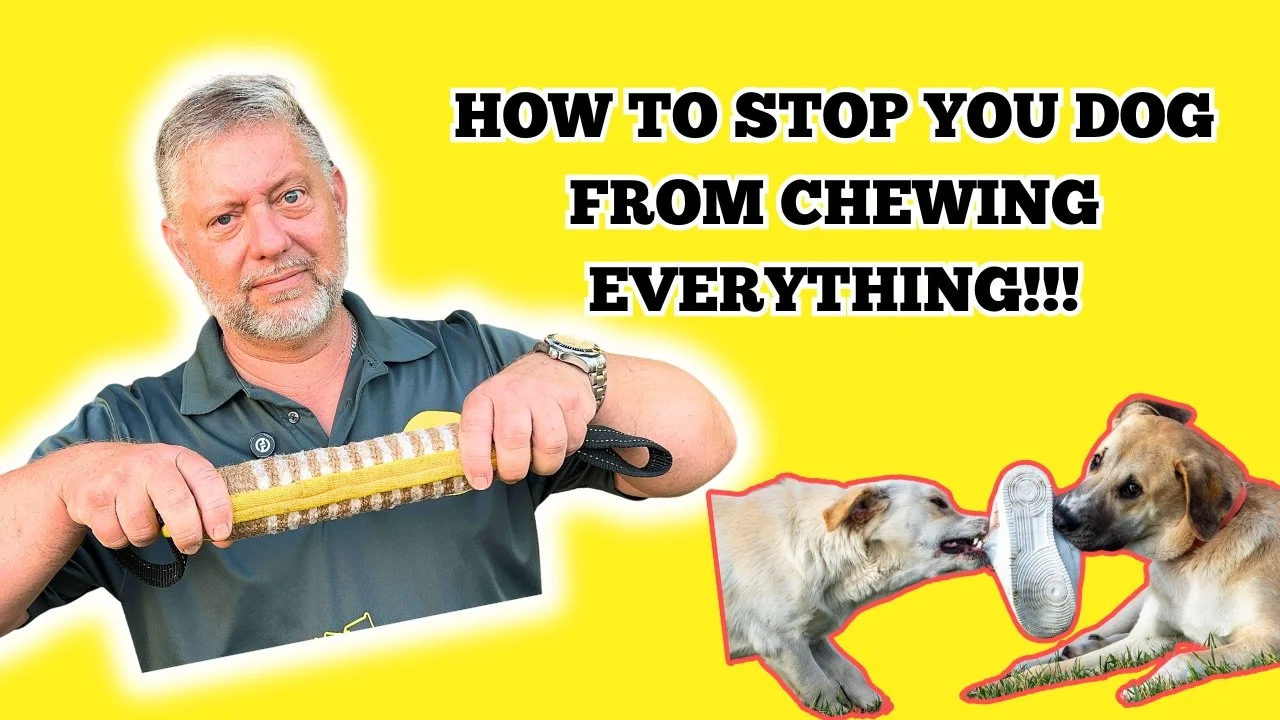
How to Stop Your Dog from Chewing Everything When You're Gone
Is your dog destroying furniture while you're away?
It's not revenge—it's boredom.
Dogs need a job, and if you don’t give them one, they’ll make their own.
Learn a simple 3-step plan to stop destructive chewing: mental work, physical exercise, and exhaustion.
A tired dog won’t wreck your home—they’ll sleep, recover, and wait for you. Train smarter, fix the cause, and enjoy a stress-free home.
Is your dog turning your furniture into a personal chew toy while you're away? If you've ever come home to shredded cushions, gnawed table legs, or destroyed shoes, you’re not alone.
Many dog owners face this frustrating issue. But before you assume your dog is acting out of spite, let’s get one thing clear: It’s not payback. It’s boredom.
Dogs, especially high-energy working breeds, need a job. If you don’t give them one, they’ll create their own—usually in a way you won’t like.
So, how do you stop the destruction? By understanding their needs and providing the right outlets for their energy.
Understanding Why Dogs Chew
Dogs chew for a variety of reasons, but the most common ones include:
Boredom: When left alone without mental or physical stimulation, dogs look for something to do. Chewing is an easy, self-rewarding activity.
Anxiety or Stress: Some dogs chew to cope with separation anxiety. Destruction often happens soon after you leave.
Lack of Exercise: A dog with too much pent-up energy will find a way to release it, and that often means tearing apart your belongings.
Teething (for Puppies): Young dogs naturally chew to relieve teething pain and explore the world.
If your dog is chewing everything in sight, it’s a sign they aren’t getting enough stimulation. The solution? Drain their energy before you leave.
The 3-Step Plan to Prevent Destructive Chewing
1. Mental Work – Make Them Think
Dogs aren’t just physical creatures—they have active minds that need stimulation. The more they think, the more energy they burn. Before you leave, engage their brain with:
Obedience Training: Run through basic commands like sit, down, stay, and recall. Keep sessions short but focused.
Problem-Solving Tasks: Use puzzle toys or hide treats around the house for them to find.
Marker Training: Reward behaviors with a quick game or praise, reinforcing engagement and focus.
When a dog has to work through a problem or obey a command, they burn mental energy—just like you would after a long meeting or an intense study session.
2. Physical Work – Tug-of-War Over Treats
Once their brain is engaged, it’s time to tire out their body. Many working breeds have a strong drive for physical engagement. Instead of relying solely on treats, use an active game like tug-of-war as a reward.
Why Tug Works: It builds engagement, satisfies their natural prey drive, and gives them a controlled way to expend energy.
Short and Effective: A few rounds of intense tug combined with training can drain more energy than a long, slow walk.
Balance Matters: Combine structured tug games with obedience work to reinforce good behavior.
3. Exhaustion – Brain + Body = KO’d Dog
Once you’ve worked their brain and body, your dog should be tired. A drained dog is a relaxed dog. They’ll be in recovery mode, ready to sleep rather than destroy.
Compare it to Humans: Imagine leaving a mentally draining meeting and immediately hitting the gym. By the end, all you want is to rest. Dogs experience the same thing when properly exercised.
Chew-Proofing Tip: Provide appropriate chew toys, so if they do feel the need to chew, they pick the right things.
When you leave after this structured routine, your dog won’t be searching for things to destroy. They’ll be recovering, waiting for you to return.
What Not to Do
Many dog owners try quick fixes that don’t address the root cause. Here’s what doesn’t work:
🚫 Punishing After the Fact: Your dog won’t understand why they’re being scolded hours later. Punishment won’t stop future chewing.
🚫 Relying Solely on Chew Toys: While chew toys are great, they aren’t a solution by themselves. If your dog is still full of energy, a toy won’t stop them from finding other things to chew.
🚫 Crating Without Exercise: A crate can help prevent destruction, but if a dog is crated without being tired first, they’ll just become frustrated and anxious.
Watch This Method in Action!
For a step-by-step demonstration of how to stop your dog from chewing everything while you’re gone, watch my latest YouTube video below.
Final Thoughts
Your dog isn’t trying to make your life difficult. They’re just following their instincts. If they have extra energy and no outlet, they’ll use whatever is available—whether that’s a chew toy or your favorite couch.
By combining mental stimulation, physical work, and exhaustion, you’ll set your dog up for success. Train smarter, not harder. Address the root cause, and you’ll stop destructive chewing before it even starts.
- Marc Windgassen
No Drive… No Joy
#DogTraining #StopChewing #WorkingDogs #BalancedTraining

7 Lessons From Training 3,000+ Dogs
Dog training isn’t just about rewards. It’s about structure, consistency, and leadership. Clear direction, proper timing, and confidence matter. Repetition builds reliability, and emotions don’t train dogs… clarity does. Leadership is earned, not assumed.

Most people think dog training is all about rewards.
It’s not.
Treats help, but they don’t build lasting obedience.
Structure, consistency, and leadership do.
After working with over 3,000 dogs, I’ve learned what really makes a difference.
Here are seven key lessons every dog owner should know:
1. A Dog Follows Clear Direction
If you don’t provide it, they’ll make their own rules. Dogs thrive on structure-without it, chaos takes over. Your job is to guide, not just react.
2. Timing is Everything
Reinforce good behavior the moment it happens. A second too late, and the dog won’t connect the action to the reward (or correction).
Precision makes training faster and more effective.
3. Simple Beats Complicated
Fancy tricks mean nothing if your dog won’t come when called. Master the basics first-sit, down, recall, leash walking. A reliable dog is far more valuable than a showy one.
4. Confidence Transfers
A nervous handler creates a nervous dog. If you hesitate, they will too. If you panic, they will escalate. Calm, confident leadership makes all the difference.
5. Repetition Builds Reliability
A dog doesn’t “know” a command after five tries. True training is about consistent practice over time. If you want a solid recall or a reliable sit-stay, put in the reps.
6. Human Emotions Don’t Train Dogs
Guilt, frustration, or sympathy won’t teach a dog what’s right or wrong. Clear, consistent feedback does. Keep emotions out of the equation and focus on communication.
7. Leadership is Earned
Dogs don’t follow requests-they follow leaders. Leadership isn’t about dominance. It’s about consistency, clarity, and setting boundaries. If you don’t lead, your dog will fill the gap.
Final Thoughts
If you’re struggling with training, chances are it’s not about the dog-it’s about how you’re leading. Training isn’t just about commands; it’s about relationship, trust, and consistency.
Which of these lessons do you need to focus on most? Comment down below ⬇️
-Marc Windgassen
No Drive… No Joy

Stop Your Dog from Jumping – Fast and Easy Fixes
✔️ Stop your dog from jumping with these quick, effective methods.
✔️ Reward sitting, ignore bad behavior, and use leash corrections.
✔️ Reinforce calm actions—dogs repeat what gets rewarded.
✔️ Stay consistent, and your dog will learn fast!

Your dog keeps jumping on you, guests, or strangers? Annoying, right? The good news is, you can stop this fast without yelling, shoving, or getting frustrated.
Here’s how to fix it step by step:
1. Reward Sitting Instead of Jumping
Dogs jump to get attention. But what if they learned sitting gets them what they want instead?
✔️ When your dog sits, reward them with food, a toy, or praise.
✔️ Ignore jumping. Zero attention, no eye contact, no petting.
✔️ Be consistent. Reward sitting every single time.
Your dog will figure it out:
Sitting = attention.
Jumping = nothing.
2. Ignore & Step Forward
✔️ If your dog jumps, don’t react. No words, no eye contact.
✔️ Take a small step forward into them.
✔️ This throws them off balance. And dogs hate losing balance.
✔️ Without a reward, they’ll drop the habit fast.
3. Use a Leash Correction
If your dog is on a leash and jumps, use a quick leash correction:
✔️ A gentle sideways tug. Just enough to interrupt the behavior.
✔️ This isn’t about punishing the dog. It’s about breaking the pattern.
✔️ Follow up by rewarding calm behavior.
4. Step on the Leash
✔️ If your dog jumps, they shouldn’t be able to launch up freely.
✔️ Keep the leash short enough so that when they try to jump, they feel resistance.
✔️ They’ll self-correct because jumping stops being fun.
5. Catch & Reward Good Behavior
✔️ Notice your dog sitting calmly without being told? Reward them!
Dogs repeat what works for them. Make sitting their best option.
Final Thoughts: Stay Consistent
✔️ Reward what you want ✅
✔️ Ignore what you don’t ❌
Dogs are simple. If jumping stops getting them what they want, they’ll quit. If sitting gets them all the rewards? That’s what they’ll choose.
Stick with it. You’ll see results fast.
Need More Help? Want expert guidance? Book a session and get your dog trained right.
Marc Windgassen
No Drive... No Joy

Dog Parks Are a Disaster for Your Dog
Dog parks are unpredictable. Untrained dogs and clueless owners create chaos.
One bad experience can undo months of training. Fights and stress can cause lasting issues.
Health risks are real. Parasites, bacteria, and poor maintenance lead to illness.
Better alternative: Choose controlled environments for safe, quality socialization.

Dog parks seem like a great idea.
An open space for dogs to run, play, and socialize. But the reality? They do more harm than good. Here’s why:
1. No Control = High Risk
Dog parks are a free-for-all. You can’t predict who or what will be there.
Untrained dogs + clueless owners = chaos.
Aggressive dogs? You won’t know until it’s too late.
Bad habits spread fast—especially when there’s no control.
What to do instead: Don’t assume a dog park is a safe space. Choose semi-controlled environments where you can manage interactions.
2. One Bad Experience Can Undo Months of Training
All it takes is one bad encounter to change your dog’s behavior for the worse.
A fight at the park can turn your dog reactive for life.
If you’ve put in time training a rescue dog, one negative experience can erase months of progress.
Dogs don’t need more socialization; they need quality socialization.
What to do instead:
Be picky about socialization. Set up controlled playdates with dogs and owners you trust.
Socialization is not just about your dog meeting other dogs.
It’s about exposing your dog to:
New environments
New sights
New scents
New sounds
New people
3. Health & Safety Risks Are Real
Dog parks aren’t just playgrounds—they’re breeding grounds for illness and injury.
Parasites, bacteria, and viruses spread easily.
Many parks are poorly maintained, increasing the risk of infection.
Dogs can pick up bad behaviors—like excessive rough play or guarding.
Why avoiding dog parks works:
You skip expensive vet bills.
Your dog stays healthy.
You prevent unnecessary training setbacks.
The Bottom Line
Dog parks create more problems than they solve. If you want a well-balanced, social dog, focus on controlled environments where you can guide their interactions.
Stay smart. Train with intention.
Follow me for real, effective dog training advice.
— Marc Windgassen
No Drive... No Joy.

Why Won’t Your Dog Stop Barking? Here’s What You Need to Know
Dogs bark. It’s natural. But when it turns into an endless noise-fest, there’s a reason behind it.
Common causes? Boredom, anxiety, attention-seeking, fear, and excitement. Fixing the barking means addressing the root cause… not just silencing the noise.
✅ Bored? Increase mental and physical exercise.
✅ Anxious? Work on desensitization.
✅ Seeking attention? Ignore the barking, reward the quiet.
✅ Scared? Build confidence with positive reinforcement.
✅ Overexcited? Teach impulse control.
Barking is communication. Understand the message, fix the cause, and the noise stops.
No Drive... No Joy.

Dogs bark. It’s normal. But when it becomes non-stop, it’s a problem.
So why won’t your dog stop? Let’s break it down.
5 Common Reasons for Excessive Barking
1️⃣ Boredom
Dogs need stimulation. A dog with nothing to do will find ways to entertain itself—including barking. If your dog is barking for no apparent reason, boredom is a likely cause.
2️⃣ Anxiety (General or Separation Anxiety)
Stress leads to barking. Whether it’s general anxiety or separation anxiety, an anxious dog will bark to release pent-up tension. If your dog starts barking the moment you leave, separation anxiety could be the issue.
3️⃣ Attention-Seeking Behavior
Dogs are smart. If barking gets them attention, they’ll keep doing it. If you react every time your dog barks, they learn that barking works.
4️⃣ Fear
Loud noises, unfamiliar people, or sudden movements can scare dogs. Their instinct? Barking.
5️⃣ Excitement
Some dogs can’t contain their energy. They see another dog, hear their leash jingle, or get hyped about mealtime—cue the barking.
The Solution? Fix the Cause, Not the Noise
Trying to stop barking without addressing the root cause is pointless. Instead, tackle the real issue:
✅ Boredom Barking? → Increase mental and physical stimulation. Play engagement games, introduce puzzle toys, and ensure regular exercise.
✅ Separation Anxiety? → Work on desensitization. Leave for short periods and gradually extend the time. Keep departures and arrivals low-key.
And most importantly…
CRATE TRAIN YOUR DOG!
✅ Attention-Seeking Barking? → Ignore it. Reward quiet behavior instead.
✅ Fear-Based Barking? → Identify the trigger and help your dog build confidence around it with positive reinforcement.
✅ Excitement Barking? → Teach impulse control. Reward calm behavior, not overexcitement.
Final Thoughts
Barking is a symptom, not the problem. Fix the cause, and the barking stops. Focus on engagement, confidence-building, and consistency. Your dog isn’t just barking to annoy you… they’re communicating. It’s your job to listen and address the real issue.
– Marc Windgassen
No Drive... No Joy.
Still can’t fix your dog’s excessive barking? Book a consultation with me here ⬅️

How to Crate Train Your Dog: Quick and In-Depth Guide
Crate training your dog is a game-changer! Learn step-by-step how to make the crate a positive, safe space your dog will love, ensuring peace of mind for you.

Crate training your dog is a valuable skill that can make a world of difference in your dog's behavior and your peace of mind.
This guide will walk you through the essential steps to successfully crate train your dog, ensuring they feel comfortable, safe, and happy in their crate.
Watch the Step-by-Step Video Guide
Before diving into the detailed instructions, I recommend watching the video below, which visually demonstrates each step of the crate training process. This video will give you a clear idea of what to expect and how to execute each step effectively.
The Basics of Crate Training
Crate training starts with building trust and making the crate a positive and enjoyable space for your dog. Here’s a quick rundown of the initial steps:
Introducing the Crate: Begin by placing some food at the entrance of the crate. Your dog will naturally approach, sniff, and eat the food while keeping all four feet outside the crate.
Gradually, you can toss food further inside the crate, encouraging your dog to step in with their front paws.
Building Confidence: Over time, increase the distance of the food placement inside the crate.
At this stage, it’s crucial not to close the gate. The dog must learn that the crate is a safe place, and they can exit whenever they choose.
This freedom builds trust.
Extending Crate Time: Once your dog is comfortable going in and out, you can start closing the gate briefly while they are inside eating.
Start with just a few seconds, and gradually extend the time. Continue to reinforce the experience positively by feeding them while the gate is closed.
Teaching Commands: Every time your dog enters the crate, say the word “crate.” Over time, this will become a command that your dog will respond to automatically.
Additionally, teach your dog to sit and wait for your command before exiting the crate.
This ensures your dog does not rush out, which could be dangerous in certain situations, such as at the vet's office or when in the back of a pickup truck.
Advanced Crate Training Techniques
Once your dog is comfortable with the basics, you can advance to the next level of crate training:
Increase Duration:
Gradually increase the amount of time your dog spends in the crate with the gate closed.
Start with short periods and extend them as your dog becomes more comfortable.
Decrease Feeding Frequency:
Initially, you’ll be feeding your dog frequently while they’re in the crate.
As they become more accustomed to it, start extending the intervals between feedings.
Eventually, your dog should feel relaxed in the crate even without the immediate presence of food.
Random Rewards:
Occasionally, place food in the crate when your dog isn’t watching.
This makes the crate a “magic box” where food randomly appears, further encouraging your dog to enter the crate willingly and spend time there.
The Benefits of Crate Training
Crate training offers numerous benefits for both you and your dog. It provides a safe space for your dog, helps with house training, and can make travel or visits to the vet much easier.
A well-crate-trained dog will see the crate as a positive place and may even seek it out on their own to rest or relax.
By following these steps, you can ensure that your dog feels secure and happy in their crate.
Remember, patience and consistency are key.
Over time, your dog will come to see the crate as their own personal haven.
Conclusion
Crate training is a gradual process that requires patience, but the results are well worth the effort.
With the right approach, your dog will not only accept the crate but also come to love it as a safe and comfortable space.
Whether you're starting with a puppy or an adult dog, these techniques can help you achieve a successful crate training experience.
Comment your thoughts down below as I’m curious to know how crate training has or hasn’t worked for you. What has your experience been?
For more in-depth tips and personalized guidance, subscribe to my newsletter or feel free to reach out for a consultation.
Happy training!

Why Online Dog Training is the Perfect Choice for Montana
The Convenience and Flexibility of Online Dog Training
In Montana, where the population density is just 7 people per square mile, many dog owners live far from city centers.
Online dog training eliminates the need for travel, allowing you to train your dog from the comfort of your home, whether you're in Billings or on a remote ranch.

Montana, with its vast landscapes and rural lifestyle, offers a unique environment for dog owners. However, the state's low population density and remote locations can make accessing professional dog training services a challenge.
This is where online dog training, also known as virtual dog training, becomes the ideal solution for Montana's dog owners.
The Convenience and Flexibility of Online Dog Training
In Montana, where the population density is just 7 people per square mile, many dog owners live far from city centers.
Online dog training eliminates the need for travel, allowing you to train your dog from the comfort of your home, whether you're in Billings or on a remote ranch.
How Does Online Dog Training Work?
In this video, I explain how virtual dog training works.
Key Benefits:
Accessibility: Train from anywhere, no travel required.
Real-Time Guidance: Get live feedback during sessions via Zoom, just like in-person training.
Recorded Sessions: Access recordings of your training sessions to reinforce learning
PDF Summaries: A summary of your most recent online session is emailed to you after each session..
High Dog Ownership, Limited Local Options
Montana has one of the highest rates of dog ownership in the U.S., with 52% of households owning at least one dog.
Despite this, finding local dog trainers can be difficult due to the state's vast size and rural nature.
Online training bridges this gap by offering personalized, one-on-one sessions that I tailor to you and your dog’s specific needs.
Why Choose Online Training?
Tailored Sessions: Focused on your dog's unique behavior and training needs.
Effective: Real-time feedback helps in transforming your dog's behavior quickly and efficiently.
Owner Training: A vital aspect of dog training that is often overlooked is that dog owners also have to be trained and build a working relationship with their dog.
Suitable for All Ages and Breeds
Online training is suitable for dogs of all ages.
You can start as early as 8 weeks old, which is especially important during the critical imprinting phase of your puppy’s development.
For older dogs, the flexible nature of online sessions allows for gradual and effective habit transformation.
Training at Any Age:
Start Early: Begin as early as 8 weeks, even before vaccinations are complete.
Older Dogs Welcome: Training is effective at any age, though it may take longer to replace old habits.
The Rural Advantage of Virtual Training
For rural Montanans, online dog training offers unmatched convenience.
With nearly half the population living in rural areas, the ability to schedule sessions at convenient times and eliminate travel is a significant advantage.
Why It Works for Rural Areas:
No Travel Needed: Train from your home, no matter how remote.
Consistent Progress: Weekly consultations keep your dog’s training on track.
Owner-Led Success: Without the physical presence of a trainer, you develop a stronger bond and sense of accomplishment with your dog.
See Behind the Scenes Footage of Online Dog Training

Why First-Time Dog Owners Should Think Twice Before Getting a Rottweiler
Rottweilers are powerful, loyal, and intelligent dogs, but they require extensive training and socialization, making them unsuitable for first-time dog owners. Their strength, headstrong nature, and the need for continuous guidance demand an experienced handler to ensure they grow into well-behaved companions.

This is an image of my Rottweiler named Force, taken by Michael Windgassen
Rottweilers are undoubtedly magnificent dogs, known for their strength, loyalty, and intelligence. However, they are not the best choice for first-time dog owners. Here’s why:
1. High Training and Socialization Needs
Rottweilers require extensive training and early socialization. From the moment they come home, they need consistent and structured training sessions. They thrive on routine and need to be taught how to behave in various situations. This isn't a one-time effort but a continuous process that demands dedication and patience.
2. Behavioral Changes
In the first three years of their lives, Rottweilers go through significant behavioral changes. These changes require a keen understanding of dog behavior and an ability to adapt training methods accordingly. Without this knowledge, managing a Rottweiler can become overwhelming.
3. Physical Strength and Control
Rottweilers are powerful dogs. If you’re not accustomed to handling large breeds, walking a Rottweiler in public can be a challenge. They can be headstrong and require a firm yet gentle hand to guide them. Without proper control, situations can quickly become difficult to manage, especially around other dogs or distractions.
4. Exploiting Weaknesses
Rottweilers have a knack for sensing and exploiting their owner's weaknesses. If you’re inconsistent or unsure in your training methods, they will pick up on this and may become difficult to handle. Establishing yourself as a confident and knowledgeable leader is crucial, and this can be particularly challenging for first-time dog owners.
5. Risk of Aggression
A poorly trained and socialized Rottweiler can pose a risk of aggression, particularly if they suddenly sense a change in their owner's behavior. If a Rottweiler hasn’t experienced firm and consistent leadership in its early years, attempting to assert dominance later on can lead to growling or worse. It’s essential to establish boundaries and leadership from day one.
Conclusion
Owning a Rottweiler can be incredibly rewarding for those who are well-prepared and experienced. However, for first-time dog owners, the demands of this breed might be too great. It’s important to honestly assess your ability to meet these needs before bringing a Rottweiler into your home. If you’re looking for a more manageable breed to start your dog-owning journey, consider a breed that better suits a beginner's lifestyle and capabilities.
Rottweilers are wonderful companions for the right owner, but they require experience, knowledge, and a commitment to continuous training. Think carefully and choose wisely.
If you’ve read this blog and still unsure as to whether the Rottweiler is the right breed for you and your family, book a breed consultation with me by visiting my appointments page.